Szeth-son-son-Vallano
The Way of KingsSzeth-son-son-Vallano is the Truthless of Shinovar, known as the Assassin in White, and one of the book’s starkest figures of obedience without freedom. He possesses terrifying skill with Stormlight and a Shardblade, yet his defining condition is not mastery but submission: he kills because his masters command it, while the laws imposed upon the Truthless forbid him only one death—his own. Across the narrative, the contrast between his lethal power and his abject status turns him into both an assassin and a living indictment of the systems that make responsibility difficult to escape.
Identity and Introduction
Szeth first appears at a treaty-signing celebration wearing white, a Parshendi tradition foreign to him that he follows because his masters require it. The revelers dance, drink sapphire wine, sing, and collapse into drunken sleep, while Szeth remains motionless on a bench at the back of the feast hall. Few notice him. The eastern peoples regard Shin as docile and harmless, and Szeth deliberately occupies that role: a servant in white robes, easy to ignore until the instant he becomes violence.
His shame is inseparable from this concealed identity. The narrative names him Truthless of Shinovar before it explains the full meaning of that status, placing moral condemnation beside physical description. He is not presented as an independent killer choosing a profession, but as a man carrying an imposed sentence through every assignment. The white clothing therefore serves two purposes at once. It marks the foreign custom attached to the murder and makes Szeth conspicuous in retrospect, while his posture and silence allow him to disappear inside the celebration.
The Assassination of Gavilar Kholin
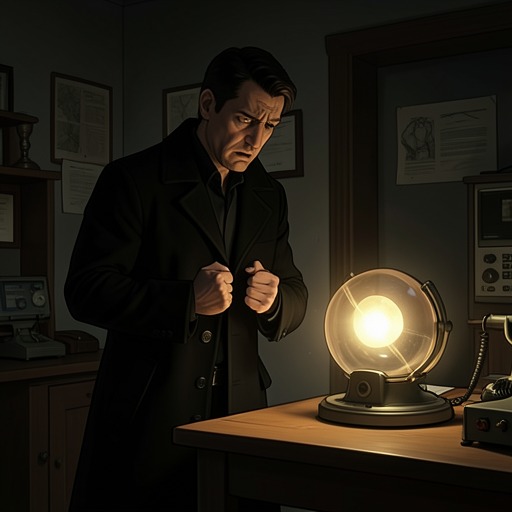
The assassination reveals the extraordinary mechanics of Szeth’s combat. When a guard reaches for a spear, Szeth touches the soldier’s shoulder and directs the Light out of his own body into the guard, Lashing him toward the ceiling. The guard experiences the room’s orientation as a sudden reversal: up becomes down, his body crashes into the ceiling, and his spear falls away. Szeth then waits through the ten-heartbeat interval required for his Shardblade to form before cutting through the second guard’s neck.
The scene’s violence is controlled rather than frenzied. Szeth does not need a conventional escape from the guards; he changes the relationship between bodies, stone, gravity, and direction. His Shardblade condenses from mist with water beading along its metal, and its long, thin, double-edged form is smaller than most others. Such details distinguish him from ordinary soldiers and establish that his danger lies in the combination of technique, supernatural power, and absolute compliance.
The murder becomes more morally complicated when Gavilar Kholin questions who ordered it. Szeth identifies his masters as the Parshendi, a revelation that the dying king finds implausible. Gavilar then gives Szeth a small crystalline sphere tied to a chain and insists that it must not be obtained by those pursuing it. He also sends a message to his brother: the brother must find the most important words a man can say. Gavilar dies before the mystery is resolved, leaving Szeth as both the agent of the assassination and the unwilling bearer of information that points beyond it.
For Szeth, the contradiction is explicit. Killing is described as the greatest of sins, yet he stands as Truthless and continues to profane the stones beneath his feet with murder. His condition does not absolve him; instead, it makes guilt permanent. The one life he is forbidden to take is his own, so even remorse cannot become an act of release. His violence is therefore framed as an enforced repetition, a sentence designed to continue rather than conclude.
Powers, Methods, and Submission
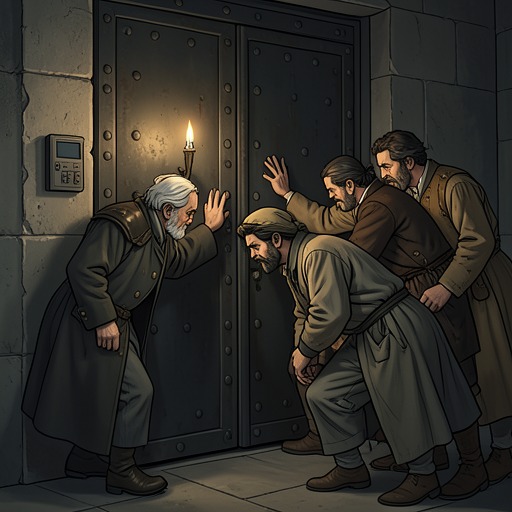
Szeth’s fighting method depends on precise use of Light. He can redirect a person’s orientation and movement through a Lashing, then combine that manipulation with the delayed summoning of his Shardblade. Later, he spins between two guards as their eyes burn out, drops them quietly, and cuts through the hinges and latch of a grand door with three quick strokes. After absorbing Stormlight from a pouch of gemstones at his waist, he kicks the door open with Light-enhanced force, sending it crashing into a crowded feast hall.
This later attack shows how efficiently he converts preparation into shock. The guards are already dead before the feast hall understands what has happened; the damaged door becomes a physical announcement of his arrival, and the noisy gathering falls silent. Szeth’s movements are economical, sequential, and practiced. Even when the surroundings contain crowds, hearths, plates, and celebration, his attention remains fixed on the assigned objective.
Yet his costumes and movements are dictated by others as readily as his targets are. At a gambling den, he crouches on a high stone ledge intended to hold a lantern, with his legs and the shelf hidden beneath a long cloak so that he appears to hang from the wall. Makkek designs a black, formfitting costume and cloth mask for him, though the cloak is too large and the clothing too tight. Szeth obeys despite recognizing the outfit as poor equipment for an assassin because Makkek demands drama. The theatrical disguise thus exposes the reach of his servitude: even the presentation of his body belongs to the master who commands him.
The disguise also makes his difference into a weapon. Only his eyes and bald head remain visible, and his unusually round Shin eyes disturb passersby because they seem childlike. Szeth does not understand why this unsettles them, but the reaction contributes to his intended effect. His strangeness is not merely hidden; it is arranged, exaggerated, and made useful by the people who control him.
Degradation and the Cost of Obedience
Five years after the assassination of the king of Alethkar, Szeth is found sitting on a tavern floor with lavis beer soaking through brown trousers. His appearance has changed completely from the simple yet elegant white clothing of the earlier murder. His garments are grimy, worn, and fraying; he is unarmed, has not summoned his Shardblade in years, and has gone so long without a bath that his physical neglect becomes part of his identity.
He does not protest this treatment. His bowed head and hands resting in his lap suggest resignation rather than a temporary disguise, and the surrounding judgment is brutally practical: if he looks like a wretch, people treat him as one, and no one asks a wretch to assassinate people. The sentence captures the social logic of his diminished state. His degradation protects him from being recruited for the very violence that defines him, but it also confirms that his life is valued only according to his usefulness to a master.
The later image at Kharbranth continues this descent into invisibility. Szeth walks with a bowed back, carrying a sack of grain from a ship to the docks and joining the other porters through the city’s steep, twisting streets. Kharbranth’s crowded walkways make human labor more efficient than a chull cart, so he passes as one worker among many. He keeps his eyes down partly to imitate a laborer and partly to avoid the blazing sun, which he imagines as a divine witness that sees his shame. He believes he should not be outside during the day and should have hidden his terrible face.
The porter’s sack reverses the image of the Assassin in White without erasing it. The same man who once entered a royal feast as an almost invisible servant now carries grain through a peaceful harbor city. His hands remain capable of extraordinary violence, but the narrative emphasizes the burden on his back, the lowered gaze, and the desire not to be seen. His power has not freed him from humiliation; it has made him more conscious of the moral weight he carries.
Narrative Function and Significance
Szeth’s appearances are structured around abrupt contrasts: celebration and murder, white robes and black theatrical costume, supernatural command and social contempt, royal chambers and tavern floors, lethal agency and personal helplessness. Each return changes the meaning of the previous one. The assassin who seemed to act with complete control is revealed as a Truthless unable to refuse his masters, while the degraded porter who appears powerless remains the same person capable of transforming gravity, stone, doors, and bodies into weapons.
His story also links private guilt to larger political upheaval. The assassination of Gavilar Kholin is not an isolated killing: the Parshendi are identified as Szeth’s masters, Gavilar dies while protecting a crystalline sphere, and his final message directs his brother toward words whose importance is not yet understood. Szeth therefore carries a secret across the narrative even when he carries nothing else. He is a moving point of connection between the king’s death, the Parshendi, the obligations imposed by Truthlessness, and the threat represented by the coming Everstorm.
The character’s deepest significance lies in the unresolved difference between obedience and innocence. Szeth obeys every master, every costume, every assignment, and every prohibition, but obedience does not make the killing less real. His restriction against suicide turns that moral burden into an endless mechanism: he cannot escape through refusal, and he cannot escape through self-destruction. The result is a figure whose remarkable competence intensifies rather than cancels his vulnerability. Szeth-son-son-Vallano is dangerous because he can act with perfect precision, and tragic because the conditions under which he acts leave him almost no recognized way to become free.